
Oneida County Criminal Records
A criminal court record in Oneida County is the formal case file kept by the Idaho trial court system after a criminal case opens. It can include the charging instrument, appearance minutes, docket entries, motions, orders, plea records, disposition, sentencing order, fines, restitution, probation terms, no-contact orders, and appeal notices. The public index is available through the Idaho iCourt Portal, while copies of pleadings, orders, judgments, and sentencing papers are requested from the local court clerk.
Oneida County is in Idaho's Sixth Judicial District. The local trial court structure includes District Court and the Magistrate Division at the courthouse in Malad. Felony matters may move through preliminary proceedings in Magistrate Court before District Court activity. Misdemeanors, infractions, traffic crimes, and many first appearances often stay in the Magistrate Division. The Oneida County Magistrate and District Courts page lists the local court clerks and court contact extensions used for case questions.
Charges alone do not tell the full case story. For the narrower arrest-to-charge path, use the Oneida County arrest records and court charges page. The criminal court file is broader because it follows the case through hearing events, rulings, plea or trial, judgment, and sentence.
Search Oneida County Criminal Court Records
Oneida County does not run a separate county-only criminal case database. Public case status and hearing information are searched through Idaho iCourt. The state court records page explains that general trial court case information is available through iCourt, but records from a case may require a courthouse kiosk or a request to the clerk where the case was filed. For Oneida County criminal court records, that means using the statewide portal first and the Oneida court clerk when the public index is not enough.
- Open iCourt Smart Search and enter a case number, defendant name, business name, or other available search key.
- Use Advanced Filtering Options when available, and set the location to Oneida County to avoid statewide name matches.
- Filter by case type, case status, file-date range, or judicial officer if those details are known.
- Use Search Hearings for court dates, selecting Oneida County and the Oneida criminal hearing category.
- Request copies from the Oneida clerk if the docket points to a pleading, sentencing order, or judgment that is not viewable online.
The Oneida County public records request page routes requesters to the right county department. Court file requests should go through the court or clerk channel, while sheriff records and jail-related records use law enforcement channels. Phone, mail, in-person, and online payment paths are all listed in county and state court materials.
Oneida County Criminal Case Flow
A Oneida County criminal court record grows as the case moves through the court. A law-enforcement event may start the process, but the court file begins when charges are filed and a case number is assigned. A public docket can show hearing dates, continuances, plea events, orders, warrants or returns when public, and sentence-related entries. Custody status may be checked through Caribou County Jail or VINE when a person is detained, but that is not the same thing as the court file.
Case flow: Charges Filed › Arraignment › Pretrial and Motions › Plea or Trial › Disposition › Sentencing
| Stage | What the Criminal Record May Show |
|---|---|
| Charges filed | Complaint, information, citation, count number, alleged statute, filing date, and case number. |
| Arraignment | Initial appearance or arraignment event, plea entry, release conditions, and next hearing. |
| Pretrial and motions | Motions, orders, continuances, no-contact terms, suppression issues, or amended charges if public. |
| Plea or trial | Guilty plea, not guilty plea, verdict, dismissed counts, acquittal, or other charge-level outcome. |
| Sentencing | Jail, probation, fines, fees, restitution, treatment terms, court costs, and compliance review dates. |
The Oneida County Prosecuting Attorney page states that the office prosecutes felony and juvenile matters committed in Oneida County and misdemeanor crimes and infractions outside Malad City. That charging role is why the prosecutor's filing may appear early in the criminal case record, while later court orders come from the judge or magistrate.
What Oneida Criminal Records Show
Public iCourt results and courthouse records do not always show the same depth. The public portal can show index and status information, while the full file can include documents that must be requested. Idaho's court-record access rules also allow redaction or withholding of sealed, shielded, juvenile, victim-identifying, medical, financial, and minor-related information. A person reading Oneida County criminal court records should treat the online docket as a starting point, not a complete document set.
| Field | What It Shows |
|---|---|
| Case number | The court record identifier used in iCourt, clerk requests, payments, and hearing searches. |
| Defendant name | The person charged in the case, with sensitive identifiers withheld from public display. |
| Charges and counts | Each alleged offense, statute reference, severity, filing date, and charge-level status when public. |
| Docket entries | Hearings, filings, orders, continuances, failures to appear, warrant events if public, and minute entries. |
| Plea and disposition | How the defendant answered and how each count ended, such as guilty, dismissed, or acquitted. |
| Sentence | Penalty terms after conviction, including probation, jail, fines, restitution, or treatment conditions. |
The Idaho Supreme Court's Clean Slate Act information explains how eligible criminal records may be shielded from public disclosure.
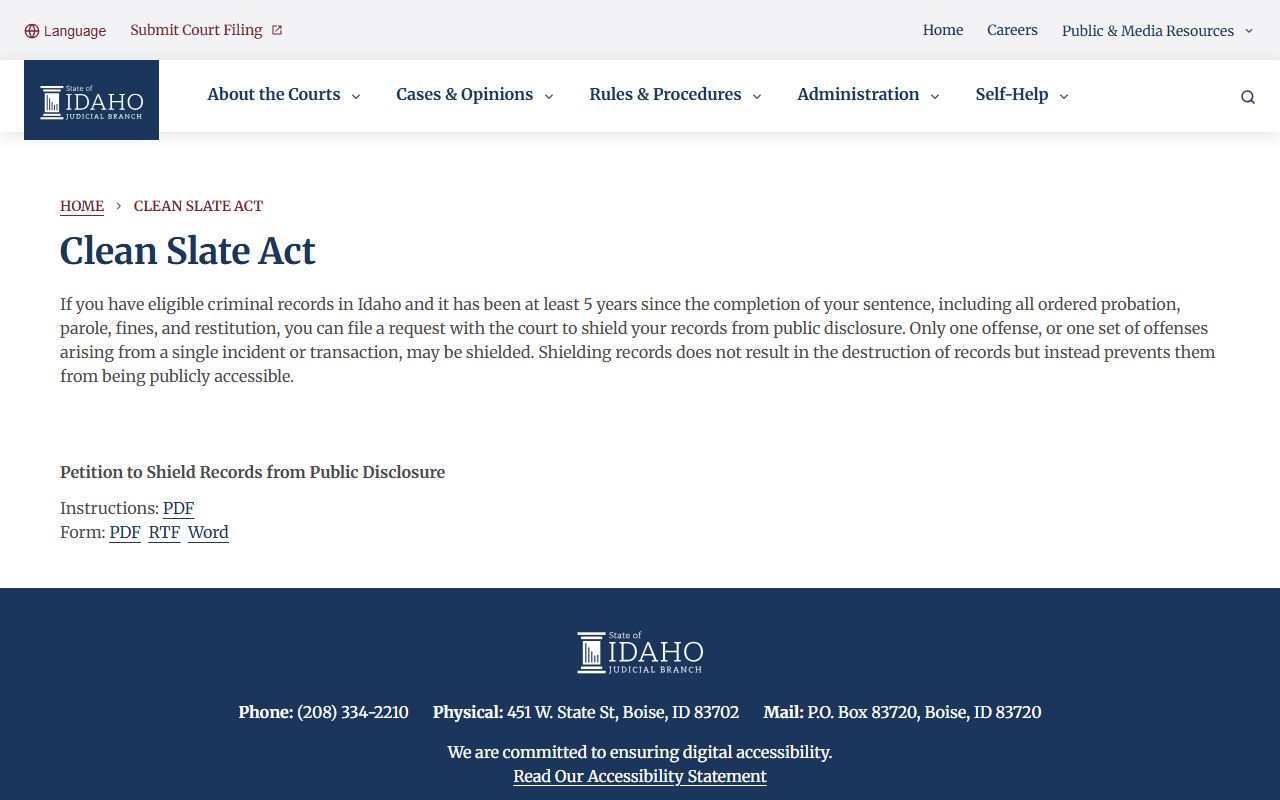
Clean Slate shielding matters when a public criminal record search shows less than an older paper or agency file might contain.
Oneida Criminal Charges vs Convictions
A charge is an accusation filed in court. A conviction is an outcome after a guilty plea, guilty finding, or verdict. Oneida County criminal court records can show charges that were later reduced, amended, dismissed, or resolved without conviction. That distinction is critical when reading a docket because one arrest can produce several counts, and each count can have a different status.
| Point | Charge | Conviction |
|---|---|---|
| Meaning | A filed accusation that a law was violated. | A final guilty result by plea, finding, or verdict. |
| Timing | Appears near the start of the case or after amendment. | Appears at disposition or judgment. |
| Record effect | May remain visible even if dismissed, unless sealed or shielded. | Can support sentence, fines, probation, jail, or restitution. |
| How to verify | Read the count list and docket history. | Read the disposition, judgment, and sentence fields. |
Criminal-history shielding is governed by the official Idaho Code section on criminal history and Clean Slate shielding.
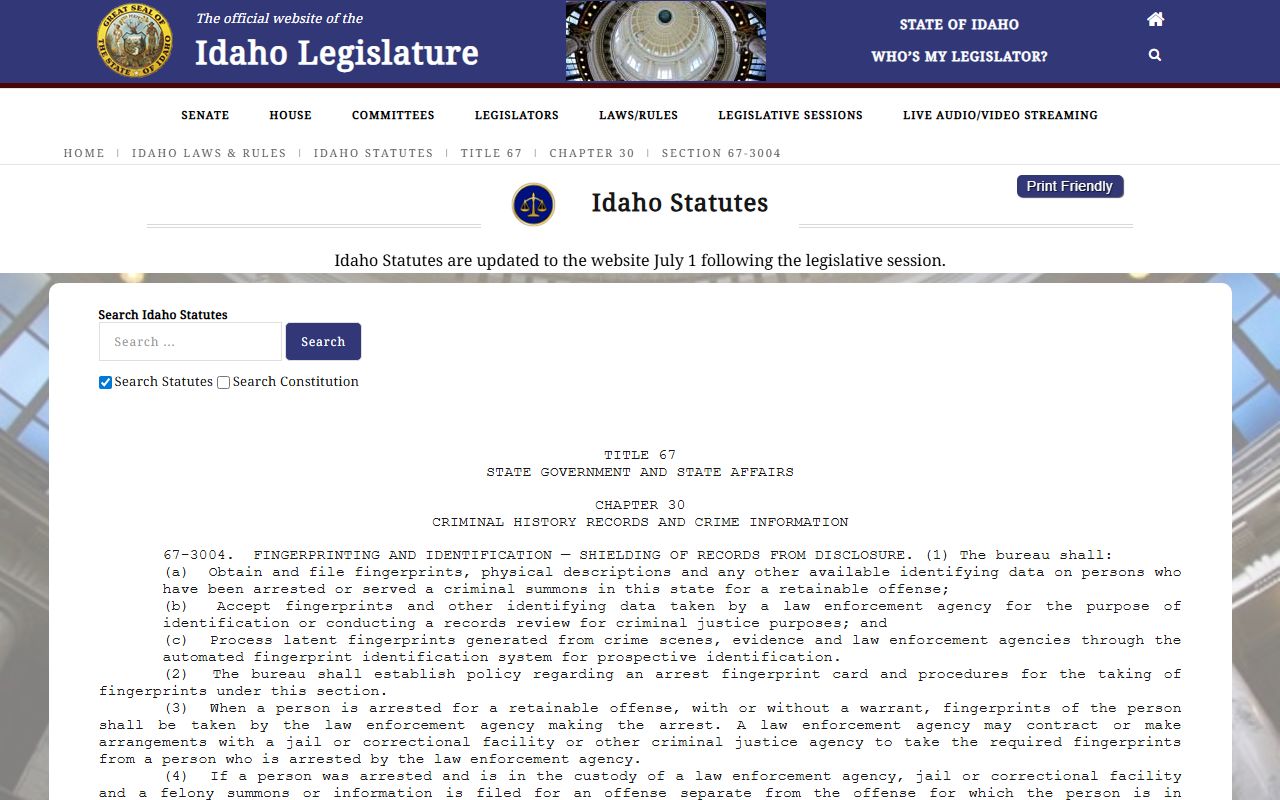
The statute source supports the difference between public case visibility and records available to authorized government users.
Access to Oneida Criminal Records
Idaho criminal court records use court access rules as well as public-record principles. Idaho Court Administrative Rule 32 governs access to Idaho judicial-branch court records. Idaho Code section 74-102 gives a general right to examine public records unless an exemption applies, while section 74-103 covers timing and copy handling for public-record responses. For court files, the Judicial Branch says case information may be searched online, but documents can require a kiosk or clerk request.
The local clerk function is tied to the Oneida County Clerk, Recorder, and Auditor office. M. Lon Colton is listed as Clerk of the District Court, and the court page lists deputy court clerks for District and Magistrate Court work. For certified copies, sentencing orders, or older records not easy to identify in iCourt, the clerk counter is the key local access point.
Note: Sealed cases and sealed event entries do not appear in iCourt, even when an order to seal remains public.
Oneida Sealed vs Expunged Records
Idaho sources use several terms that should not be merged. A sealed record is hidden from public inspection by rule or court order. A shielded record under the Clean Slate Act is kept from public disclosure when a court grants eligible relief, but the file is not destroyed. Juvenile expungement under Idaho law is a separate route for qualifying juvenile records. In Oneida County, the same practical point applies to all three: a public portal search may not show the full legal history.
| Point | Sealed | Expunged or Shielded |
|---|---|---|
| Public view | Hidden from public access by order, rule, or exemption. | Restricted from public disclosure after statutory relief. |
| Idaho example | Sealed cases or sealed event entries under ICAR 32. | Adult Clean Slate shielding or juvenile expungement. |
| File status | The record exists, but public access is blocked. | Adult shielding does not erase all government access. |
| Where to ask | Oneida court clerk or the court that sealed the matter. | The court where the eligible criminal or juvenile case was filed. |
Juvenile access is addressed through official Idaho juvenile record law, including Idaho Code section 20-525.
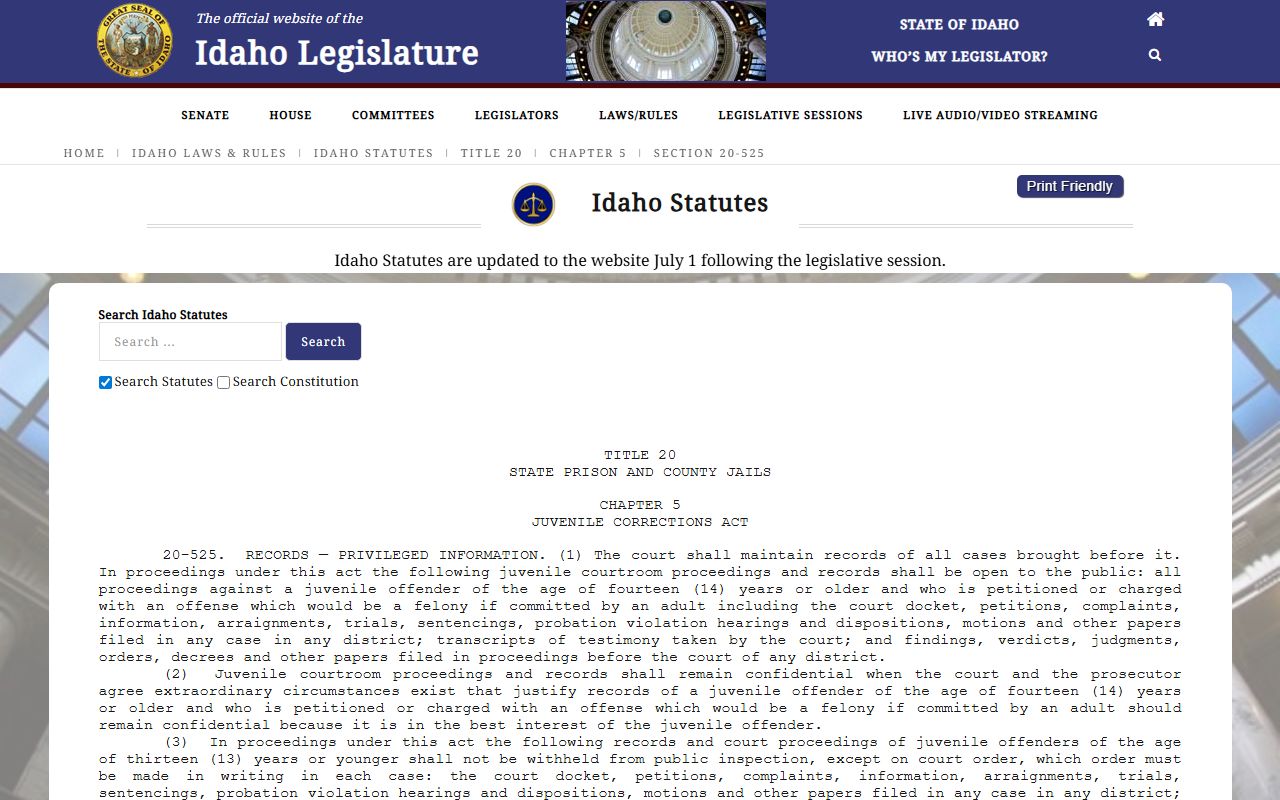
Juvenile rules can make some records public in specific felony-level situations while still protecting other records from ordinary search access.
Restricted Oneida Criminal Records
Restricted criminal court records include more than sealed adult cases. Juvenile matters, adoption-related records, mental-health details, victim-identifying information, financial account numbers, Social Security numbers, protected addresses, and minor-related data may be withheld or redacted. Idaho Code section 20-525 makes some juvenile proceedings open for juveniles age 14 or older charged with felony-level conduct, but the same research notes confidentiality options. Idaho Code section 20-525A addresses juvenile expungement.
The official Idaho juvenile expungement statute gives the separate procedure for qualifying juvenile records.
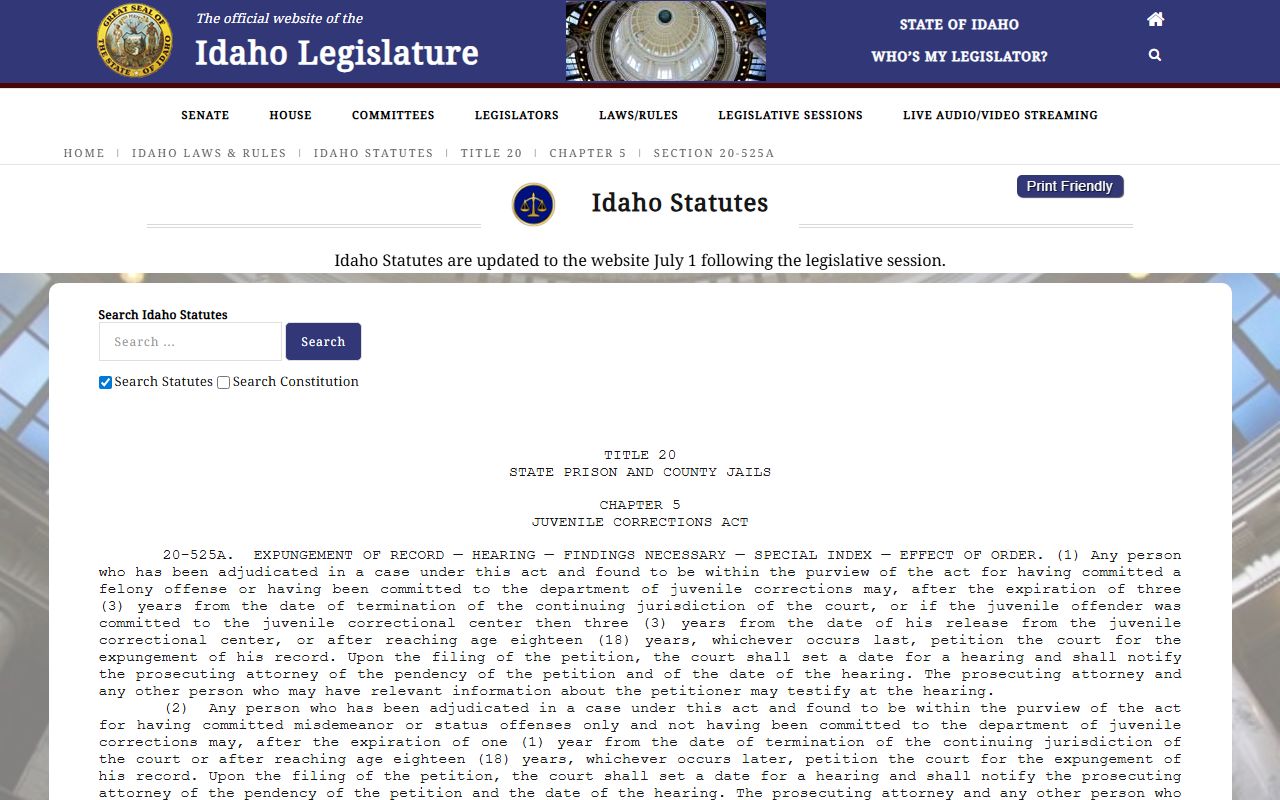
Because juvenile expungement is separate from adult Clean Slate shielding, a requester should match the remedy to the type of criminal court record involved.